
Is Singapore Tap Water Safe to Drink? Guide (2026)
Singapore’s tap water is supplied as high-quality drinking water managed by the Public Utilities Board (PUB), and it is safe to drink straight from the tap. This guide covers what the water actually tastes like, whether it’s fine for baby formula, where to refill your bottle when you’re out, and how to think about bottled water and filters if you’d rather not rely on the tap alone.
Is Singapore Tap Water Safe to Drink Straight From the Tap?
Yes, it is safe to drink. The water PUB supplies is consistently rated highly for quality, coverage, and affordability.
- Nationwide access to piped water is universal, with both coverage and water quality at a very high standard
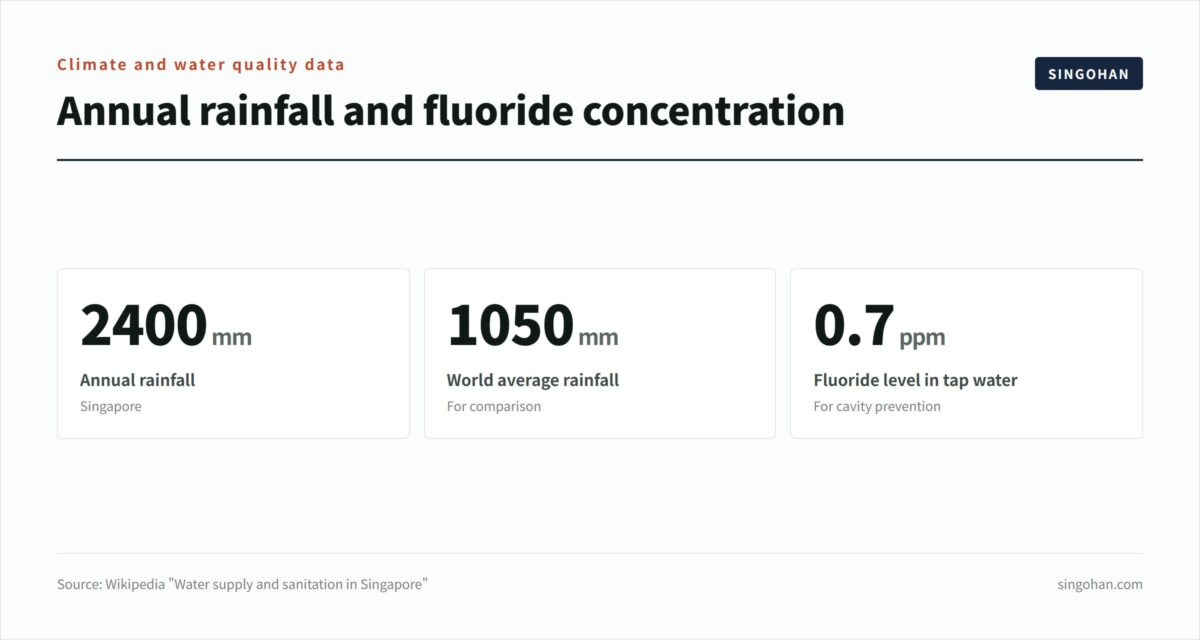
- The water supply is fluoridated at 0.7 ppm, and Singapore was the first country in Asia to run a nationwide fluoridation programme
- NEWater, the country’s reclaimed water, is even sold bottled, and government leaders have publicly drunk it to demonstrate its safety
- Singapore achieved water self-sufficiency by the mid-2010s
Given this track record, drinking straight from the tap is a perfectly normal choice here. If you’re still a little unsure, the sections below cover practical workarounds.
Does the Taste or Smell Differ From What You’re Used to at Home?
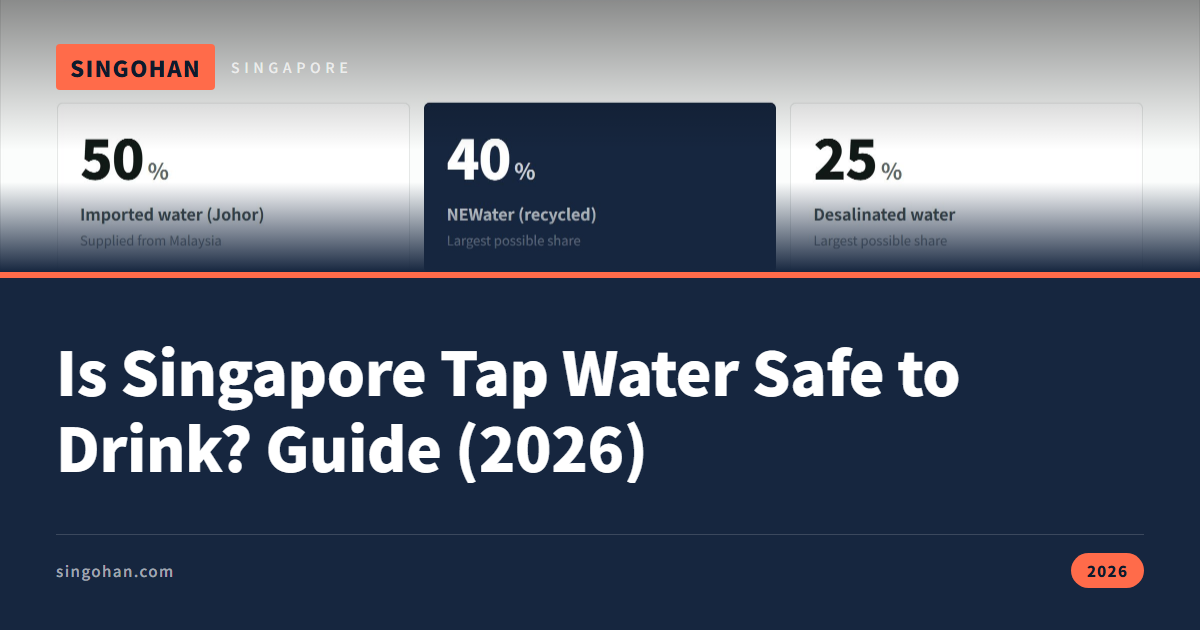
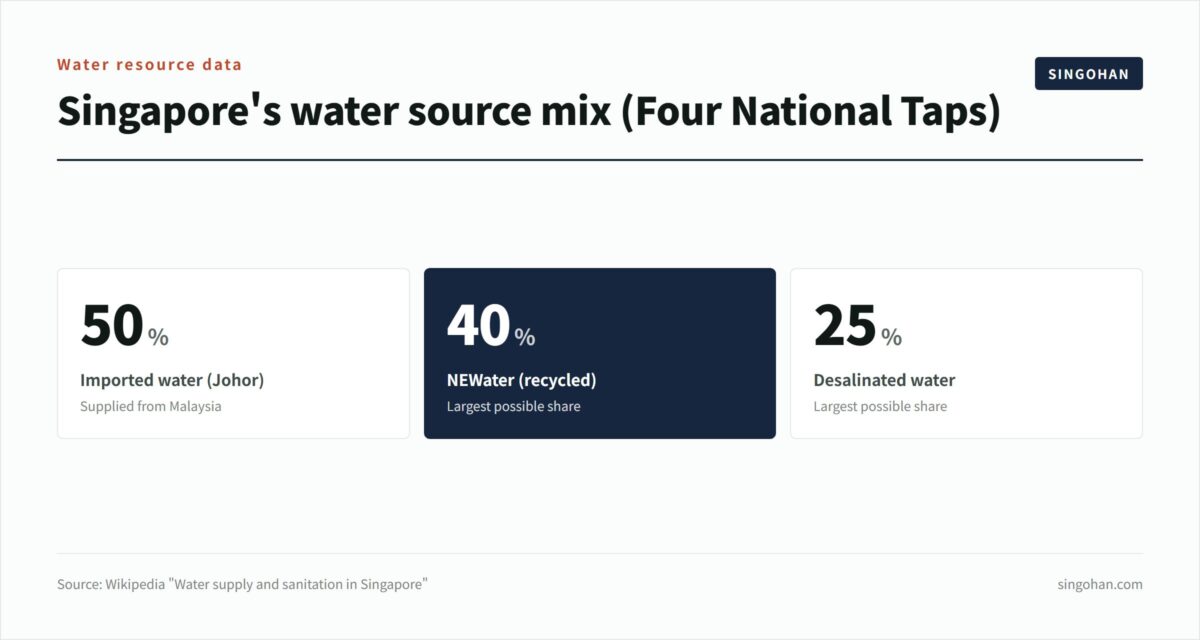
Because Singapore blends water from several different sources, the taste can come across differently than tap water you’re used to elsewhere.
| Water Source | Share of Supply |
|---|---|
| Imported water from Johor, Malaysia | About 50% |
| Reclaimed water (NEWater) | Up to about 40% |
| Desalinated water | Up to about 25% |
| Domestic rainwater catchment | Remainder |
Source:
Because it draws on multiple sources, people’s impressions of the taste vary quite a bit from person to person. If you notice a difference, chilling the water tends to mask any variation in taste.
Is It Safe to Use for Baby Formula?
Yes — since the tap water meets drinking-water standards, it’s generally fine to use for preparing infant formula.
One thing worth knowing is that the supply is fluoridated at 0.7 ppm. If you’d like extra reassurance, it’s worth checking with your pediatrician before you travel, and using bottled mineral water alongside tap water if that puts your mind at ease. If you’re relocating to Singapore with family on an Employment Pass or S Pass, it’s worth reviewing the work visa application process as part of your planning.
Where Can You Refill a Water Bottle While Out and About?
Public refill stations aren’t everywhere, so carrying a reusable bottle is the most practical approach day to day.
NEWater operates a visitor centre where you can learn more about the reclamation process. Since the number and location of refill points vary by venue, it’s worth checking official information before you visit. On days with long outdoor stretches, like a full day at Universal Studios Singapore, filling your bottle before the gates open is a good habit. The same goes if you’re heading out for a day trip to Johor Bahru or another border town — top up before you leave.
How Much Does Bottled Mineral Water Cost?
Bottled mineral water is easy to find at convenience stores and supermarkets across Singapore.
Prices vary by store and brand, so this article won’t quote a specific figure. For a broader sense of everyday costs, our guide to Singapore’s cost of living breaks down typical food and household spending. You can also order bottled water through food delivery apps, which is handy to keep in mind on days when heading out isn’t convenient.
Do You Need a Water Filter or Water Dispenser?
No, it’s not a necessity, since the tap water itself is already supplied as high-quality drinking water.
If you’re particular about taste, or if you’re considering a move to a condominium, it’s worth thinking about a filter or dispenser based on what the unit already offers. If you’re on a longer-term posting, there’s no rush — you can decide once you’ve settled in.
Is the Ice and Juice at Hawker Stalls Safe?
The tap water supply itself is managed to a high standard, and ice and drinks at food stalls are generally assumed to be made from the same tap water supply.
The same logic applies to drinks at hawker centres. If you’d like less ice in your drink, just ask for “less ice” and staff will happily adjust. Building in some time at air-conditioned spots, like a Japanese restaurant, also helps you pace your hydration in Singapore’s humid climate.
Frequently Asked Questions
Will drinking tap water straight give you an upset stomach?
Everyone’s tolerance differs slightly, but the water supply is treated to meet drinking-water standards before it reaches the tap. Most residents and visitors drink it directly without any issues. If you have a particularly sensitive stomach or are newly arrived, easing in gradually or pairing it with bottled water for the first few days can help.
Is NEWater the same thing as regular tap water?
NEWater is reclaimed water that has been highly purified, and it’s blended into the wider supply network as one of several sources feeding the tap. So while it isn’t the entirety of what comes out of your tap, it makes up a meaningful share of the overall blend, alongside imported and desalinated water.
Why is fluoride added to the tap water?
Fluoride is added specifically to help prevent tooth decay, as part of a nationwide fluoridation programme that covers the whole population. This approach is common in many countries and Singapore was the first in Asia to roll it out at a national level, at a concentration of 0.7 ppm.
Is hotel tap water also safe to drink?
Hotels are connected to the same public water supply network as residential buildings, so the water quality is essentially the same. If you’d still prefer bottled water during your stay, most hotels stock it at the front desk or minibar for a small fee.
Does water quality change during Singapore’s rainy season?
Singapore’s average annual rainfall of 2,400 mm is well above the global average of 1,050 mm, and the catchment system is specifically engineered to manage this volume of rainwater. Treatment processes are designed with this seasonal variation in mind, so quality remains consistent year-round.
What happens if imports from Malaysia are disrupted?
Singapore reached water self-sufficiency by the mid-2010s, meaning the country can maintain supply through NEWater, desalination, and local catchment even without relying on imported water. This diversification was a deliberate national strategy built up over several decades.
Summary
Singapore’s tap water is supplied as high-quality drinking water managed by PUB, and it’s safe to drink straight from the tap. The supply blends four sources — imported water, NEWater, desalinated water, and local rainwater catchment — and Singapore achieved full self-sufficiency by the mid-2010s. The same tap water is used for baby formula, ice, and juice, though you can always pair it with bottled mineral water or a filter if that gives you extra peace of mind. Carrying a reusable bottle when you’re out makes it much easier to stay hydrated in the humid climate.
Image credit
- Photo: Volker Braun / Pexels