
Singapore Hawker Centres 2026: What They Are, What to Order & Best Places to Go
If there’s one food experience that defines Singapore, it’s the hawker centre. These open-air food hall complexes are where locals eat breakfast before work, families gather on weekends, and first-time visitors discover that Singapore punches far above its weight in the culinary world. In 2020, UNESCO recognized Singapore’s hawker culture as an Intangible Cultural Heritage of Humanity — which tells you everything you need to know about how seriously this city takes its food. Here’s your complete guide for 2026.
1. What Is a Hawker Centre? History and Culture
A hawker centre is a government-built, open-air complex housing dozens of individual food stalls under one roof — or more accurately, one large shelter. The concept dates back to the 1960s and 70s, when Singapore’s government relocated street vendors (“hawkers”) from the roadside into organized, regulated facilities to improve hygiene and urban order.
Today, over 100 hawker centres are scattered across the island, serving millions of meals daily at prices that remain extraordinarily affordable — typically $3–8 SGD (roughly $2–6 USD) per dish. Chinese, Malay, Indian, and various other Asian cuisines sit side by side, making hawker centres a living representation of Singapore’s multicultural identity. They’re not tourist traps — they’re where real Singaporeans eat, every single day.
2. How to Order, Pay, and Behave
Finding a Seat
At most hawker centres, you find a table first, then walk to individual stalls to order. This is a shared dining environment — it’s perfectly normal to sit at a table with strangers.
The “Chope” System
Singaporeans have a unique custom called “choping” — reserving a seat by leaving a packet of tissues on the table before going to order. It’s a widely understood local code that says “this seat is taken.” Joining in is perfectly acceptable, and it’s a nice piece of local culture to participate in.
Ordering
Most stalls have English menus or photographs, making ordering easy for visitors. Simply walk up, point if needed, pay, and collect your food when called or when it’s ready at the stall.
Payment
Many stalls now accept PayNow (Singapore’s QR payment system) or card, but a meaningful number of older, family-run stalls are cash-only. Carrying small bills and coins is strongly recommended.
Tray Return
Since 2021, Singapore has mandated tray return at hawker centres. When you’re done eating, bring your tray and dirty dishes to the designated return station. This is enforced and fines apply. Don’t leave your tray at the table.
3. Must-Try Hawker Dishes in Singapore
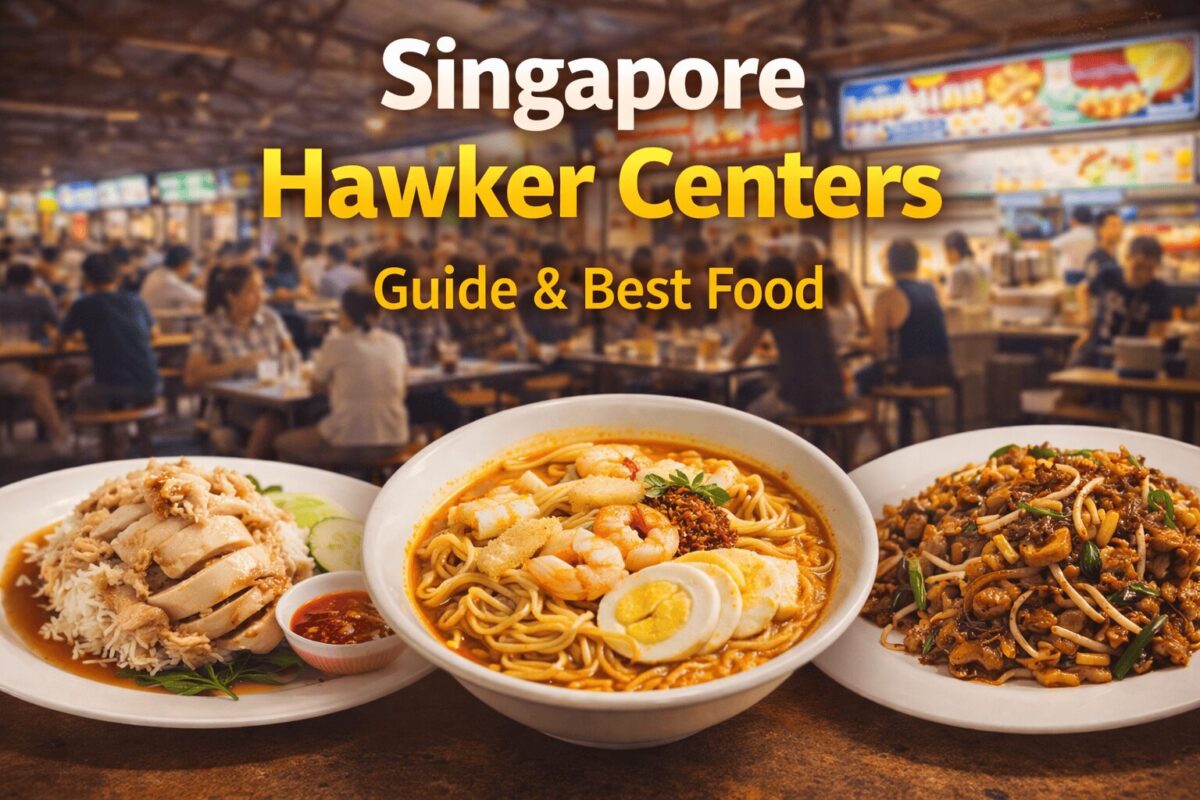
Hainanese Chicken Rice — Singapore’s unofficial national dish. Poached or roasted chicken served over fragrant chicken broth rice, with ginger, chili, and dark soy sauces. Simple, deeply satisfying, and unmissable.
Char Kway Teow — Flat rice noodles wok-fried over high heat with soy sauce, eggs, bean sprouts, Chinese sausage, and cockles. The smoky wok breath (called “wok hei”) is what makes a great plate.
Laksa — A rich, spicy noodle soup with coconut milk and rice vermicelli. Singapore-style curry laksa is creamy and bold. Assam laksa (tamarind-based) is tangier and lighter — try both.
Hokkien Mee — Thick and thin noodles stir-fried in prawn broth with prawns, squid, and pork. Best eaten with a squeeze of calamansi lime and sambal chili on the side.
Bak Kut Teh — Pork ribs slow-simmered in a herbal, peppery broth. A classic morning dish — best eaten for breakfast with fried dough sticks (you tiao) and a pot of Chinese tea.
Roti Prata — A flaky, buttery flatbread of Indian origin, cooked on a griddle and served with curry dipping sauce. Perfect for breakfast or a quick snack any time of day.
Satay — Grilled skewers of marinated chicken, beef, or mutton, served with peanut sauce, cucumber, and ketupat (compressed rice cake). Best enjoyed at night stalls like Lau Pa Sat’s outdoor satay street.
Cendol — A shaved ice dessert with pandan jelly noodles, coconut milk, and palm sugar syrup. Essential relief from Singapore’s heat.
Fish Ball Noodles — Springy fish balls in a clear or dry noodle dish. Understated and beloved by locals for its clean, straightforward flavor.
Nasi Lemak — Coconut rice served with sambal, anchovies, roasted peanuts, cucumber, and a boiled or fried egg. The Malay national dish, done exceptionally well across Singapore.
4. Best Hawker Centres to Visit
Maxwell Food Centre (Chinatown) — One of the most visitor-friendly hawker centres in Singapore, home to Tian Tian Hainanese Chicken Rice (arguably the most famous chicken rice stall in the world) and a wide range of other stalls. Well-located near the tourist circuit.
Lau Pa Sat (CBD) — A beautifully restored Victorian cast-iron market in the heart of the business district. Good for lunch or after-work meals. After dark, the surrounding street becomes Singapore’s most atmospheric satay strip.
Old Airport Road Food Centre (Geylang) — Beloved by locals, this sprawling centre is home to some of Singapore’s most storied hawker stalls, many of which have been operating for decades. A slightly off-the-tourist-trail experience worth the trip.
Tiong Bahru Market (Tiong Bahru) — Set in a charming pre-war neighbourhood, this market and hawker centre is particularly known for its morning food scene. Arrive early for a proper Singaporean breakfast.
Summary
Singapore’s hawker centres are not just a way to eat cheaply — they are an experience, a community, and a cultural institution that no visit to the city-state is complete without. Go hungry, be open to pointing at things you can’t identify, and let the food do the talking. Whether you have two days or two years in Singapore, you’ll find yourself coming back to the hawker centre again and again.
Klook.com