
Durian Season in Singapore: The June Guide to the Best Shops, Top Varieties & How to Eat the King of Fruits
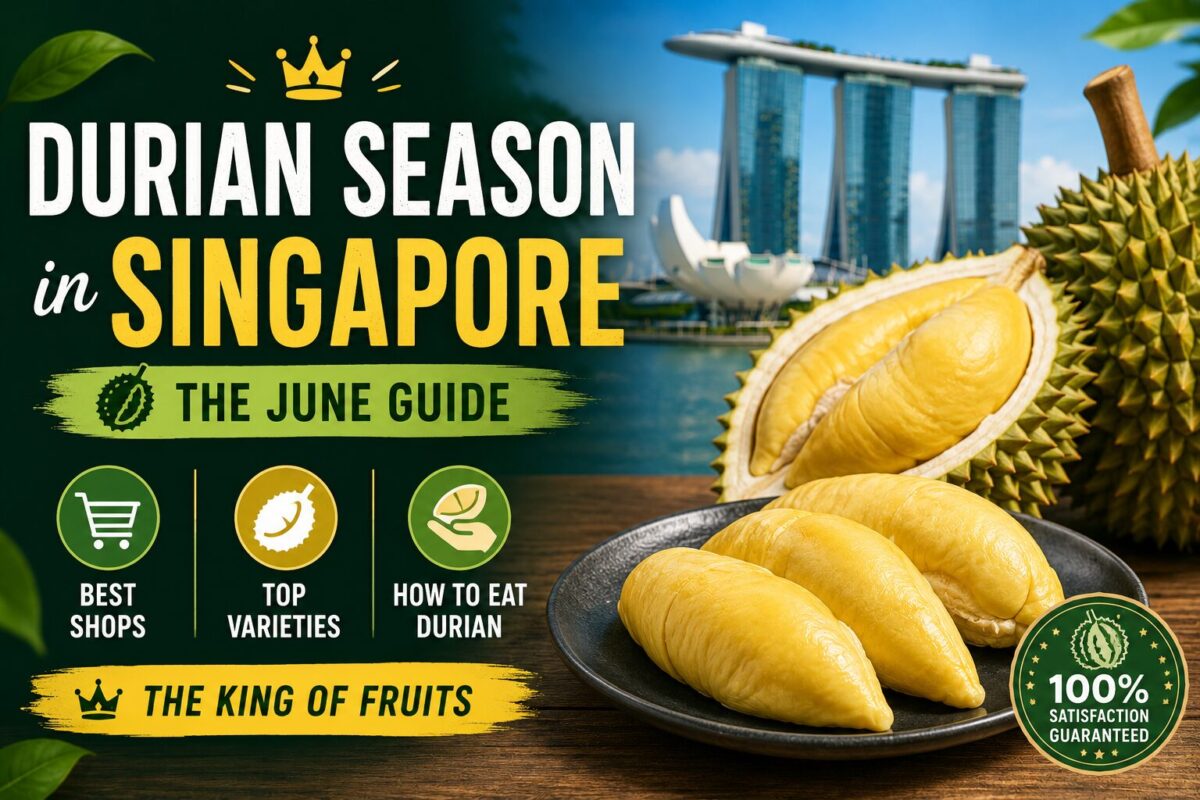
“I want to try durian in Southeast Asia — but when, where, and which one?” The answer comes down to one place and one month: Singapore in June. Imports from Malaysia, the main durian-producing region, ramp up in early summer, with the peak running June through August. This is when Mao Shan Wang, D24, Red Prawn, Black Thorn, and other premium varieties land daily — fresh, abundant, and at their most competitive prices.
This guide breaks down why June is the best month for durian in Singapore, the top varieties to try, the must-visit shops, hotel and MRT rules to know, and beginner tips so you can enjoy the king of fruits without missteps.
1. Why June Is Peak Durian Season
Singapore imports nearly all its durians from Malaysia (mostly Pahang and Johor). Malaysian durian trees fruit primarily between June and September, with the peak in June–August. You can buy durian year-round in Singapore, but June wins on three counts:
- Highest supply = lowest prices — competition between vendors drives per-kilogram prices down
- Greatest variety — 10+ types side by side, from Mao Shan Wang to Red Prawn to Black Thorn
- Best freshness — tree-ripened, just-dropped fruit arrives daily
There is a “mini-season” in December–February, but it can’t match June on quantity, variety, or freshness.
2. The Variety Guide: What to Order
| Variety | Profile | Recommendation |
|---|---|---|
| Mao Shan Wang (MSW / Musang King) | Rich, creamy, complex bittersweet — the king | ★★★★★ |
| D24 | Balanced, creamy, milder bitterness | ★★★★ (great for beginners) |
| Red Prawn | Bright orange, sweeter and fruity | ★★★★ |
| Black Thorn | Dense and intensely creamy, premium | ★★★★ |
| Golden Phoenix | Strong bitterness, for enthusiasts | ★★★ |
| XO | Mild fermented “alcoholic” notes | ★★★ |
For first-timers: Start with a small portion of D24 or Mao Shan Wang. MSW is the benchmark — once you’ve tasted it, every other durian makes sense.
Price guide (June 2026): MSW around SGD 20–35 per kg; D24 around SGD 12–18 per kg. Tree-ripened “fallen” fruit commands a premium.
3. Where to Eat Durian in Singapore
Geylang — Durian Central
Dozens of stalls line Sims Avenue, making Geylang Singapore’s largest durian district. Many stay open late into the night — perfect for a post-dinner crawl.
- Durian 36 (608 Geylang Road): A 24-hour Geylang institution near Lorong 36. Carries 10+ varieties including Mao Shan Wang, Black Thorn, Red Prawn, and D13, sourced from their own farms in Johor and Pahang.
- Geylang Loke Yew: A longstanding local favorite.
Whampoa
- Sindy Durian: A family-run shop with 30+ years of history. Staff speak English fluently, making this a top pick for tourists who want help choosing varieties.
Rangoon Road
- Combat Durian: A heritage stall since the 1960s — 50+ years in business, originally on Balestier Road. Strong on Mao Shan Wang, Golden Phoenix, and Red Prawn. Hours run roughly 12pm–8:30pm (confirm before visiting).
Bonus
- 99 Old Trees: Specialty retailer that imports from its own farm in Raub, Pahang. Café-style seating makes it especially comfortable for tourists.
4. Tasting Tours: The Easy Way to Sample Multiple Varieties
If you don’t know what to order, want to try several varieties in small portions, or feel unsure with the language, a Klook durian experience is the easy way in. Choose between a clean indoor “omakase” tasting where staff guide you through several premium varieties, or a Geylang walking tour with a local guide.
▶ Book the Geylang Night Food & Culture Tour (includes durian) on KLOOK
5. Rules and Etiquette Before You Eat
No Durian on the MRT or in Hotels
In Singapore, durian is officially banned on the MRT (subway). Violations carry fines. Almost every hotel bans durian in guest rooms — if cleaning staff detect it, expect a substantial cleaning charge.
→ Solution: Eat on-site at the stall. Most shops provide gloves, wet wipes, and water.
What Not to Combine
- Avoid mixing with alcohol — durian is calorie-dense and raises body heat; combined with alcohol, it can stress the body
- Hydrate after: locals consider durian a “heaty” food; cool down with water or fresh coconut water
- Pair with mangosteen: known as the “queen of fruits,” it balances durian’s heat — a traditional pairing that works
Eating Tips
- Each pod has slightly different aroma, color, and texture — tell staff you’re new and they’ll pick gentle ones
- Locals eat with bare hands, but most stalls offer gloves
- The smell lingers; wash hands with soap and rinse with lemon water afterward
6. Three Tips to Maximize Your June Durian Experience
- Go on a weeknight — weekends draw heavy local crowds. 7–9 pm on a weekday is the sweet spot.
- Small portions, multiple varieties — one full durian per person is too much. Aim for 300–500g each across several types.
- Carry cash — most non-chain durian shops are cash only. Bring SGD 50–100.
Conclusion
In June, Singapore becomes a mecca for durian lovers around the world. Mao Shan Wang, D24, Red Prawn, Black Thorn — you can taste them side by side, fresh from Malaysia, only during this peak window.
Cover Geylang, Whampoa, Rangoon Road, and 99 Old Trees and you’ve experienced the breadth of Singapore’s durian scene. If language or variety selection is a barrier, the durian omakase and Geylang food tour on KLOOK are the easiest entry points — whether you prefer an indoor tasting or the energy of a Geylang street crawl.
▶ Browse all Singapore food tours on KLOOK
Don’t write off durian as “too smelly to try.” In June, Singapore offers the king of fruits at its absolute best — meet it on its home turf.